Mohammed Emwazi, who is believed to be the killer Jihadi John in several beheading videos released online by the Islamic State group, may have worn out his welcome with the terrorist organization. Emwazi reportedly fled the militant group in Syria several weeks ago, bound for North Africa.
Emwazi, once a London resident, apparently fears the militant group formerly known as either ISIL or ISIS will drop him “like a stone or worse if they feel he is no longer of any use to them,” a source told the Daily Express newspaper in the U.K. The source added, “So it is possible he will end up suffering the same fate as his victims.”
The 26-year-old gained notoriety when identified as Jihadi John, who had brutally beheaded journalists and humanitarian-aid workers from the U.S. and Britain in propaganda messages released by the Islamic State group over the past year. The Express reported the loss of anonymity has terrified Emwazi.
A priority of the American and British special forces fighting the Islamic State group in Iraq and Syria is to track down Emwazi, who is concerned that jealous fellow militants may be plotting against him, the Daily Express reported.
Emwazi, a Kuwait-born U.K. immigrant who holds a degree in computer science from the University of Westminster, may be laying low with a lesser-known jihadist group in Syria. He is wanted by allied forces for questioning in the killings of James Foley, David Haines, Alan Henning, Peter Kassig and Steven Sotloff.
A former friend of Emwazi told the Express that the jihadist had not been “a good Muslim” and never wore the Islamic dress he has been seen wearing in the beheading videos. “He smoked drugs, drank and was violent towards other boys,” said the friend, who was not named in the report. “The fact he portrays himself as a strict Muslim is laughable and shameful.”
Dylann Roof Photos and a Manifesto Are Posted on Website
Photo
COLUMBIA, S.C. — Dylann Roof spat on and burned the American flag, but waved the Confederate.
He
posed for pictures wearing a No. 88 T-shirt, had 88 Facebook friends
and wrote that number — white supremacist code for “Heil Hitler”— in the
South Carolina sand.
A
website discovered Saturday appears to offer the first serious look at
Mr. Roof’s thinking, including how the case of Trayvon Martin, the black
Florida teenager shot to death in 2012 by George Zimmerman, a
neighborhood watch volunteer, triggered his racist rage. The site shows a
stash of 60 photographs of Mr. Roof, many at Confederate heritage sites
or slavery museums, and includes a racist manifesto in which the author
criticized blacks as being inferior while lamenting the cowardice of
white flight.
“I
have no choice,” it reads. “I am not in the position to, alone, go into
the ghetto and fight. I chose Charleston because it is most historic
city in my state, and at one time had the highest ratio of blacks to
Whites in the country. We have no skinheads, no real KKK, no one doing
anything but talking on the internet. Well someone has to have the
bravery to take it to the real world, and I guess that has to be me.”
The
website was first registered on Feb. 9 in the name of Dylann Roof, the
21-year-old man charged with entering a black church in Charleston
Wednesday night, attending a prayer meeting for an hour and then
murdering nine parishioners. The day after the site was registered, the
registration information was intentionally masked.
It
is not clear whether the manifesto was written by Mr. Roof or if he had
control of it. Nor is it clear whether he took the pictures with a
timer, or if someone else took them. The F.B.I. and Charleston police
officials say they are examining the site.
But
if it is genuine, as his friends seem to think, the tourist sites he
visited, the pictures that were posted and the hate-filled words filling
the site offered a chilling glimpse into the interests of an unemployed
high school dropout said to have a fixation on race and a murderous
rage.
“This
whole racist thing came into him within the past five years,” said
Caleb Brown, a childhood friend of Mr. Roof’s who is half-black. “He was
never really popular; he accepted that. He wasn’t like, ‘When I grow up
I am going to show all these kids.’ He accepted who he was, and who he
was changed, obviously.”
Mr.
Roof, who is accused of being the lone gunman who entered the Emanuel
A.M.E. Church Wednesday night and unleashing a murderous rampage with a
.45 handgun, has been charged with nine counts of murder in connection
with the killings. Victims included the Rev. Clementa C, Pinckney, who
was both the church pastor and a state senator.
Mr.
Roof, who was first identified by surveillance footage released the
morning after the killings, is being held at the Charleston County jail,
along with a North Charleston police officer charged with shooting an
unarmed African-American motorist in the back in April.
Mr.
Roof’s friends say that he only spoke of his racist leanings once —
when he recently warned that he planned to do something crazy with the
gun he had purchased with the money he got from his parents for his 21st
birthday. But they say he was bothered by the uproar surrounding the
Trayvon Martin case.
Family members of those killed Wednesday
at Emanuel African Methodist Episcopal Church in Charleston, S.C.,
addressed the shooting suspect, Dylann Roof, in court.
By Associated Press on Publish Date June 19, 2015.
Photo by Pool photo.
The website, the lastrhodesian.com,
features a photo of a bloodied dead white man on the floor. The picture
appears to be a shot from “Romper Stomper,” an Australian movie about
neo-Nazis. It was first discovered by a blogger who goes by the pen name
Emma Quangel.
The blogger was inspired by another Twitter user to pay $49 for a reverse domain search that turned up the site.
According
to web server logs, the manifesto was last modified at 4:44 p.m.
Eastern time on Wednesday, the day of the Charleston shootings, and the
essays notes: “at the time of writing I am in a great hurry.”
The
manifesto says: “The event that truly awakened me was the Trayvon
Martin case. I kept hearing and seeing his name, and eventually I
decided to look him up. I read the Wikipedia article and right away I
was unable to understand what the big deal was,” the essay says. “It was
obvious that Zimmerman was in the right. But more importantly this
prompted me to type in the words ‘black on White crime’ into Google, and
I have never been the same since that day.”
The account cites the website of the far-right Council of Conservative Citizens as a site he learned from.
A
friend of Mr. Roof’s, Jacob Meek, 15, said the references to the
Trayvon Martin case made it clear that Mr. Roof had written the essay.
“That’s his website,” he said. “He wrote it, and I just can tell.”
Watchdog
groups that track right-wing extremism say the manifesto reflects the
language found in white supremacist forums online and dovetails with
what has been said about Mr. Roof thus far — that he had
self-radicalized, and that he did not belong to a particular hate group.
“It’s clear that he was extremely receptive to those ideas,” said Mark
Pitcavage, the director of the Anti-Defamation League’s Center on
Extremism. “At the same time, he does not have a sophisticated knowledge
of white supremacy.”
In
one picture, Mr. Roof is shown posing with wax figures of slaves. In
others, he posed with a handgun that appears to be a .45-caliber Glock.
He had a .45-caliber Glock in his car when he was arrested Thursday, the
police said.
Mr.
Roof is alone in all the photos, which show a slave plantation;
Sullivan’s Island, S.C.; and the Museum and Library of Confederate
History in Greenville, S.C. He sports the same gloomy look in many of
the photos, but others depict nature scenes and vacation photographs.
According to the Southern Poverty Law Center’s glossary of racist skinhead terms,
“Fourteen stands for the ‘14 words’ slogan coined by David Lane,” who
died in 2007 while serving a 190-year sentence for his part in the
assassination of a Jewish talk show host. The slogan, according to the
center, is “‘We must secure the existence of our people and a future for
white children.” The letter H is the eighth letter of the alphabet, so
88 is a known code for “Heil, Hitler.” The website’s links contain
several passages of long racist rants, saying Hispanics are enemies and
“Negroes” have lower I.Q.s and low impulse control. The writings are not
signed.
Mr. Roof’s Tumblr had contained photos that matched his Facebook page, but both were taken down after the killings.
The
manifesto discovered Saturday uses defamatory terms for blacks, whom he
accused of being “stupid and violent” with “the capacity to be very
slick.” It laments white flight, and suggested that the whites should
instead stay behind in cities and fight.
Criticisms
are levied at Hispanics and Jews, but Asians are praised for being
racists and potential allies. Whites are unfairly portrayed as all
having been slave owners, the essay says. In reality, the author wrote,
slavery was not that bad.
Mr. Brown said his friend’s transformation appeared to have occurred after he transferred to a new high school in Lexington.
“He wasn’t putting on Facebook ‘I hate black people. I am going to shoot up a church,” Mr. Brown said.
“I think that because I am rich, handsome and a great player people are envious of me. I don’t have any other explanation.” That’s Cristiano Ronaldo talking about why people hate him. While other soccer players date models and appear in underwear ads
too, no one’s lifestyle gets under the skin of soccer fans like
Ronaldo’s. He’s one of the biggest stars at the 2014 World Cup, and also one of the most polarizing.
He earned $44 million last year, making him the ninth highest-paid athlete on earth.
He recently signed a contract that’ll pay him
$23 million per year until 2018 — making him the world’s highest-paid
active player.
He makes almost that much ($21 million annually) in off-field endorsements.
He has modeled for Armani, and has an underwear line coming out with designer Richard Chai.
He has a deal with Jacob & Co. watches, and has been spotted wearing their $160,000 watches.
His pretty boy image has made him one of the most hated players in the world.
But he had the best quote ever about it, saying,
“I think that because I am rich, handsome and a great player people are
envious of me. I don’t have any other explanation.”
He’s also rehabilitating his image with some human moments, like the time he cried after winning the Ballon d’Or.
File Photo: Soldier pictured in the scene of a bus bombing in Nairobi
Two blasts hit Kenya’s capital on Friday, May 16, 2014 killing four
people and injuring many more, in what appeared to be the latest in a
string of increasingly frequent terror attacks.
The blasts came the same week the United States and the U.K. issued
renewed warnings about possible terror attacks in Kenya, leading to a
bristling response from the country’s president Friday, who said such
warnings strengthen the will of terrorists.
Before the blasts, the U.S. embassy sent out a new travel alert
Friday to American citizens warning of a continued terrorist threat in a
country where the U.S. Embassy suffered a devastating attack in 1998.
An earlier U.S. warning this week said for the first time that the
embassy itself is taking new steps to increase security “due to recent
threat information regarding the international community in Kenya.”
Britain’s government also warned its citizens this week to avoid the
coastal city of Mombasa and beach towns nearby, prompting a travel
company to cut short the vacations of hundreds of British citizens and
fly them home.
An explosion on Friday hit a mini-van that Kenyans use for public
transportation near downtown Nairobi, and another blast went off near a
market, Kenya’s National Disaster Operation Centre said.
Security concerns have long been high in Kenya because of its
proximity to Somalia and the al-Qaida-linked terrorist group that
operates there. In September, four al-Shabab gunmen attacked an upscale
mall in Nairobi, killing at least 67 people. The 1998 embassy bombing
killed more than 200.
Since the mall attack, Kenya has suffered numerous smaller bombings
in Nairobi and Mombasa. Kenyan authorities, with the help of the FBI,
also discovered a huge car bomb that could have caused massive damage.
Armed Marines patrol the U.S. Embassy grounds in Nairobi in bullet
proof vests and helmets. Increasingly frequent emergency drills tell
embassy staff: “Duck and cover, duck and cover.”
“We know from experience whether it’s been in Yemen where embassies
have been attacked or in Benghazi where our consulate and ambassador was
attacked, anything that is a symbol of a foreign country is a potential
target,” said Scott Gration, the immediate past U.S. ambassador in
Kenya.
Gration, a retired U.S. Air Force major general who runs a technology
and investment consultancy in Nairobi, said embassies “are always a
target, whether you have a warning out or not, they tend to be a magnet
for people that have ideological intentions.”
President Uhuru Kenyatta, who began a previously planned news
conference only minutes after the Nairobi blasts, offered his
condolences but dismissed the U.S. and U.K. travel warnings, saying that
terrorism is a common problem, including in New York and Boston.
Kenyatta said he was aware of Britain’s warning and the decision to evacuate tourists.
“I don’t want to refer to anybody in particular. Acts like were done
yesterday, by the people you just mentioned, only strengthens the will
of terrorists as opposed to helping us defeat that war,” Kenyatta said.
Kenyatta said the country would install 2,000 security cameras in Nairobi and Mombasa to help combat terrorism.
Kenya sees a big drop in tourism activity — a major money maker for the country — whenever such alerts are issued.
The U.S. Embassy says that more than 100 people have been killed in
shootings, grenade attacks and small bombs in Kenya over the past 18
months.
TUI Travel, which owns the British tourism companies Thomson and
First Choice, canceled all flights to Mombasa until October because of
the security alert. The company also evacuated all customers in Kenya on
flights Thursday and Friday.
The British warning was only for the area immediately around Mombasa.
The evacuation was a private company initiative, not a government one.
Gration said many tourism companies have insurance policies that
don’t allow travelers to be in high-risk locations. He said Kenya’s
coast is a beautiful and mostly safe location.
“My belief is that everywhere there are issues and we all need to be
prudent in when we go and where we go,” Gration said. “So I don’t travel
at night, avoid big crowds and lock my doors. Whether you are in
Newark, New Jersey or Nairobi, Kenya, we can all fall victim to crime or
terrorism.”
Many of us are struggling to develop new dietary habits, while others
are just hoping to shed that lingering holiday weight. Either way,
healthy eating habits mean different things to different people, and
unfortunately some guys are of the mistaken belief that one of the best
ways to maintain a healthy diet is by removing as much fat as possible.
The truth is that your body needs fat. It’s just a matter of consuming
the right kinds of fat. To help you separate the good from the bad,
we’ve compiled a list of the best fats and where to find them.
1. Monounsaturated Fats
If you’re looking for ways to keep your cholesterol in check,
monounsaturated fats are your ticket. Why? Studies suggest they have the
ability to not only lower your bad cholesterol (LDL), but they can also
increase your good cholesterol (HDL) levels. The best places to find
them are in a wide variety of oils, as well as in avocados and even
poultry. And, for all your guys who can’t resist a good snack, you’ll be
thrilled to know that you now have an excellent excuse to snack on
cashews, almonds, and hazelnuts.
2. Polyunsaturated Fats
Polyunsaturated fats, well known for their cholesterol-reducing
capabilities, can also assist in reducing blood pressure. They’re
available in supplement form and can be found in various oils including
safflower, soy, and sunflower.
3. Conjugated Linoleic Acid (CLA)
Research suggests that consuming this fatty acid and frequenting the gym
for at least 4.5 hours per week significantly reduces body fat–not
weight. A Swedish study also discovered that CLA has a direct impact on
the reduction of some forms of colon cancer. CLA is most readily found
in grass-fed poultry and meats, as well as dairy and eggs.
4. Medium-Chain Triglyceride (MCT)
Struggling to lose weight? Consider changing from olive oil to fatty
acid MCT oil. New York-based researchers found that weight-loss program
participants consuming MCT oil instead of olive oil experienced a
greater loss of weight and fat–including intra-abdominal body fat. Why?
MCT increases fat burning. Just a few drops over your favorite meals
will help. Other sources of MCT oil include palm kernel oil and coconut
oil.
5. Fish Oil
Does heart disease run in your family? If so, you probably already know
the importance of controlling your portions, limiting salt intake, and
consuming fruits, vegetables, and fiber. According to Oregon
researchers, something else that could help in the prevention of heart
disease is fish oil. Bonus: The same researchers indicate that it could
also be effective in promoting better eye and mental health. Even if
your breath were suddenly to smell of fish, with all of these perks,
it’s still worth it.
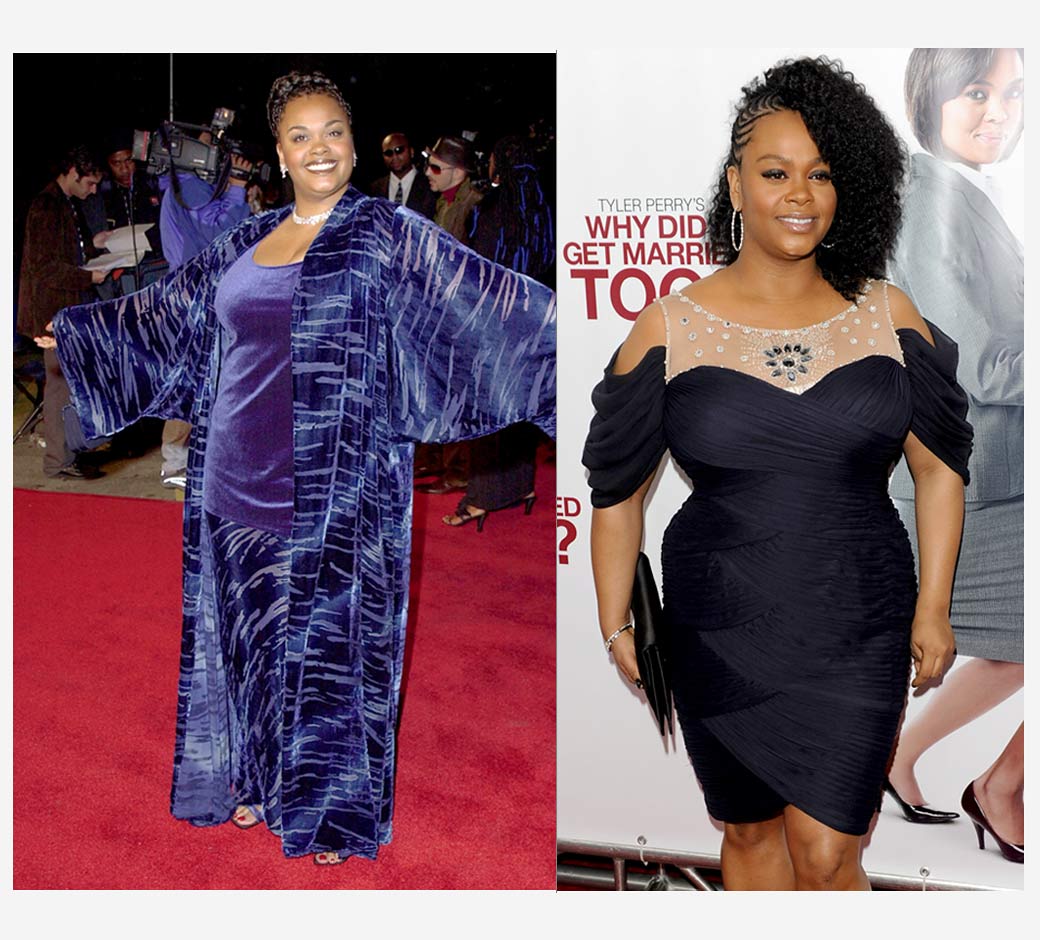
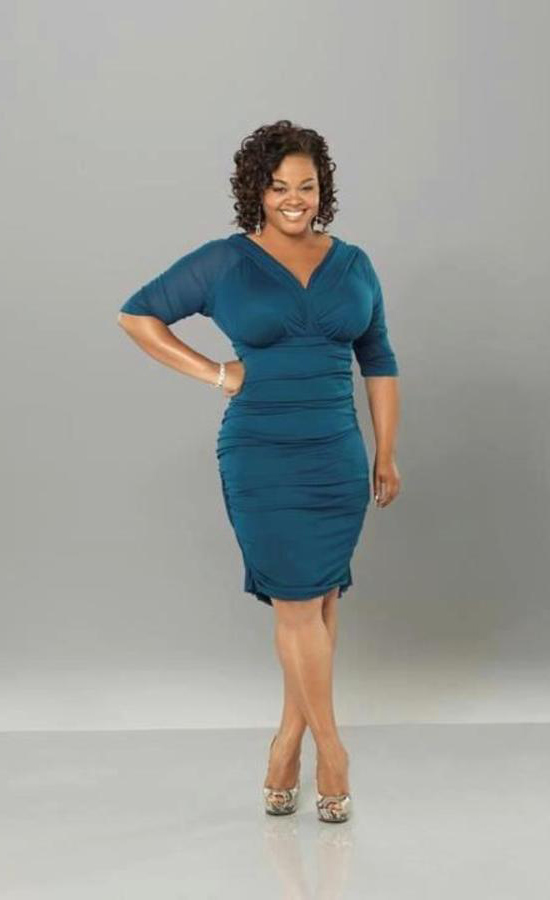
Jill Scott has made some changes that might make her the sexiest
celebrity in the country right now, at least according to some of her
fans. Her determination to avoid the “stick figure” look that has
become so popuar these days has sparked a revolution in understanding of
what it means to be beautiful. This is a far cry from the days when
Janet Jackson once said that she couldn’t do ballet because the teacher
told her that her behind was too big.
Scott’s workout regimen was recently described in BlackDoctor.org,
and it appears that she’s seeking to keep her natural physical
attraction while simultaneously working to stay healthy. Is Scott
setting a new trend, letting black women know that they can have unique
body styles and still be gorgeous? This could be huge when put up
against the long-held ideal that female celebrities can’t weigh more
than a pre-schooler in order to get opportunities.
2011 Weightloss photo
2011
2012
2013
2014
2014
2014
Scott’s workout, from what we’ve found, seems to be legitimate. She’s
not simply an overweight, unhealthy woman who has decided to be proud
of whatever is hanging from her body. She actually appears to be one
who has embraced her natural curves and has chosen to accentuate her
noticable features, rather than run away from them.
Maria Lloyd, a writer for the dating website, iDateDaily.com, recently
proclaimed Scott to be the most attractive celebrity in America right
now. Lloyd says that Scott is a refreshing diversion from the women in
Hollywood and other places who are forced to be thin in order to find
work. Lloyd says that “Scott’s acceptance of her natural curves leaves
the thousands of black women on my website cheering. Hollywood often
makes us feel that there is something wrong with our bodies. It’s also
wonderful that she’s healthy as well.”
So, we ask you – is Jill Scott now the most attractive celeb in America? If not, then why wouldn’t she be?
A gene that boosts intelligence could offer new hope to sufferers of dementia, it was revealed today. Researchers in the U.S. found a protein produced by the gene could be synthesised and used to fight the condition. The study, funded by the U.S.-based National
Institutes of Health, found the protein called klotho boosts brain
skills such as thinking, learning and memory. It is believed it could increase the strength of connections between nerve cells in the brain. Dena Dubal, professor of neurodegeneration at
UCSF, the lead author, said: ‘This could be a major step towards
helping millions around the world who are suffering from Alzheimer’s
disease and other dementias. ‘If we could boost the brain’s ability to function, we may be able to counter dementias.’ Researchers found the protein could raise IQ
by up to six points – whatever the age of the person taking it – raising
the possibility that a drug could become available to make people
cleverer. ‘Our results suggest klotho may increase the
brain’s capacity to perform everyday intellectual tasks,’ said coauthor
Lennart Mucke, professor of neuroscience at the University of California
San Francisco. People who have one copy of a variant, or
form, of the kloto gene, called KL-VS, tend to live longer and have
lower chances of suffering a stroke whereas people who have two copies
may live shorter lives and have a higher risk of stroke. In the study, researchers found that people
who had one copy of the KL-VS variant performed better on a battery of
cognitive tests than subjects who did not have it, regardless of age,
sex or the presence of the apolipoprotein 4 gene, the main genetic risk
factor for Alzheimer’s disease. The klotho gene provides the blueprint for a protein made primarily
by the cells of the kidney, placenta, small intestine, and prostate. A shortened version of the protein can circulate through the blood
system. Blood tests showed that subjects who had one copy of the KL-VS
variant also had higher levels of circulating klotho protein. The levels
decreased with age as others have observed. The researchers speculate that the age-related decrease in
circulating levels of klotho protein may have caused some of the decline
in performance on the cognitive tests. Researchers then genetically engineered mice to overproduce klotho
protein. The klotho-enhanced mice lived longer and had higher levels of
klotho in the blood and in a brain area known as the hippocampus, which
controls some types of learning and memory. Similar to human studies, the klotho-enhanced mice performed better
on a variety of learning and memory tests, regardless of age. The investigators tested a variety of
cognitive skills, including learning, memory, and attention. More than
700 subjects, 52 to 85 years old were tested as part of three studies. None had any sign of dementia. Consistent
with previous studies, 20 to 25 per cent of the subjects had one copy of
the KL-VS variant and performed better on the tests than those who had
no copies.
Performance on the tests decreased with age regardless of whether a subject had one or no copies of the KL-VS gene variant.


![Jill Scott’s New Look Makes Her The Most Attractive Celeb In America… Yes? [LOOK]](https://lh3.googleusercontent.com/blogger_img_proxy/AEn0k_u1ommViUBqJWbeRsYdhKbmLSvHVPgeuflur1vLmKJH65JwFwRJPYQmb4YABLbS5PqVMzCXrqS9al03Xs6jYgClxbkUkje9VcZBog6Od1mGrHNpARJWZ3votjYMQvGd9yhOGXuocRnYwL3_7t5e4byNxPjIpLAQ942jEE0SlwIN-tV-7E5FqAVus91ymbOSDNTakBYHjIgJfXfe38DP94-qCesqjN_2bOjWfwUpbjQTx_wR1RUMgwLTat8kb5PBAAzRJLy-Pdi2ow9DICOeCwirz-564Zm8NfTALAhCUm6LcQ=s0-d "Jill Scott’s New Look Makes Her The Most Attractive Celeb In America… Yes? [LOOK]")